The Stand-and-Chat Spread: A Bath Grazing Table That Works Without a Seat

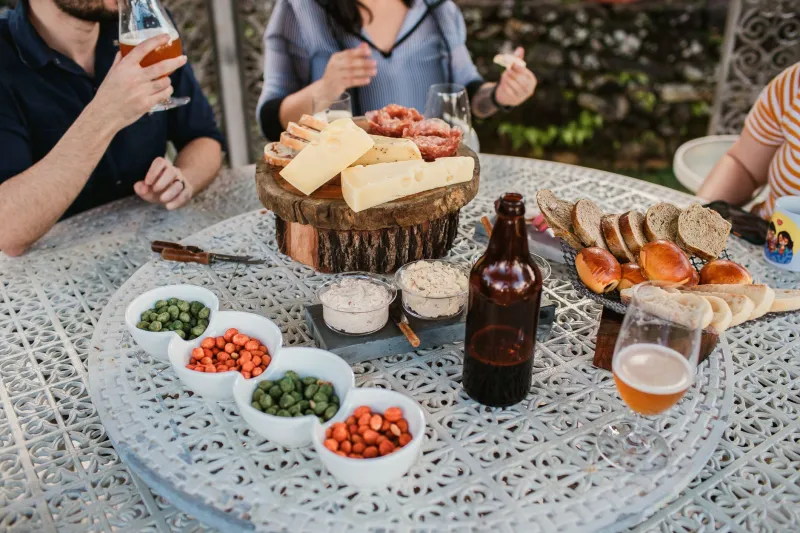
Photo: standing guests mingling around grazing table party prosecco bites townhouse, via images.justwatch.com
Standing parties are brilliant until someone hands you a plate, a glass and a napkin and expects you to keep chatting. In a Bath townhouse with a narrow hallway and a drawing room full of people, that is the moment the grazing table either earns its keep or becomes a queue. The best spread for a mingling crowd is not simply a smaller buffet. It is designed around one free hand, a moving guest and a host who would rather talk than tidy.
Start With the Room, Not the Menu
Before you think about cheese or cured meat, look at the space. A Georgian townhouse can give you a beautiful drawing room with a fireplace, a low window sill and roughly two metres of clear wall. A hired studio off Walcot Street might give you more floor but less furniture. Both are workable. What is not workable is putting the board in the middle of the room like a island. People will circle it awkwardly, block the doorway and trap the guest who only wanted another napkin.
Push the table against a wall or use a sturdy console. Leave at least a metre of breathing room behind whoever is serving themselves. If the room has a natural flow, from front door to kitchen to sitting room, place the board slightly off that route rather than across it. In a Bath rental with a tight staircase, keep the spread upstairs if the party is upstairs. Nobody wants to balance a glass of fizz on a banister while climbing to find the sausage rolls.
Bites That Behave in a Crowd
The golden rule for standing grazing is that every item should be eaten in one or two bites, without cutlery and without a bowl underneath. That rules out anything wet, floppy or heavily sauced. It also rules out the giant wedge of brie that looks generous but requires a knife, a cracker and a small ceremony.
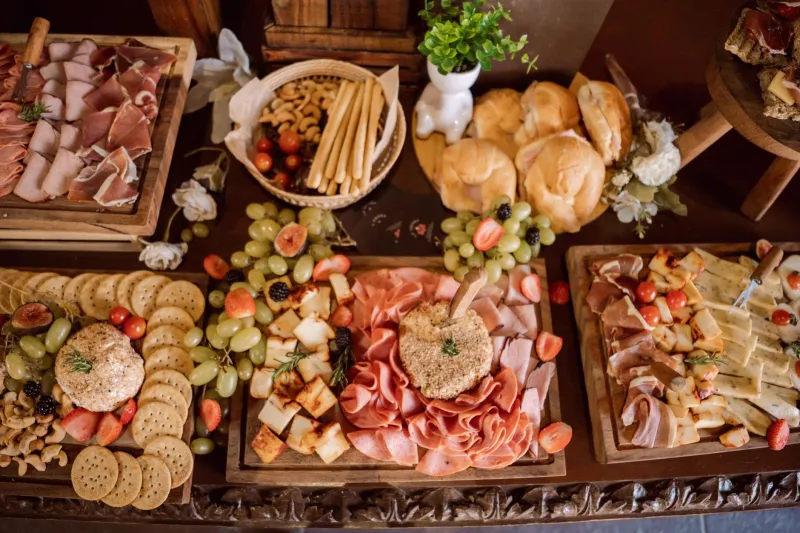
Think in terms of dry-handed, tidy shapes. Mini tartlets with a set filling. Small frittata squares. Bread sticks wrapped in prosciutto. Cheese cut into cubes or thin slices rather than left as a slab. Cherry tomatoes, grapes, olives and cornichons are all fine, but drain them properly so they do not leave a puddle. Cured meat roses look lovely and are easy to pick up. Tiny skewers work if the stick is short and the food is secure. Avoid long skewers that jab the person behind you.
Dips are the tricky bit. A central bowl of hummus invites double-dipping and drip trails. Instead, spoon thick dips into small individual ramekins or little paper cups and place a few near the front edge. Provide small picks or short tongs, but do not rely on them for everything. The table should still work if someone forgets the tongs entirely.
Height, Flow and the Two-End Rule
Board height matters more than most hosts expect. Aim for around 85–95cm from the floor, roughly kitchen worktop height. Too low and guests stoop, spill and lose their conversation. Too high and shorter guests cannot reach without asking for help. If you are using a hired table, check the height before you plan the layout. A low coffee table can work for drinks, not for a full grazing spread.
Arrange the food in two loose clusters, one at each end of the board, rather than one long runway. This splits the queue without making it obvious. Put plates and napkins at both ends too. A single stack at one end creates a bottleneck, especially in a Bath townhouse where the table might be squeezed between a sofa and a sash window.
The middle of the board can hold the visual centrepiece: a generous cheese arrangement, a bowl of seasonal fruit or a pile of bread. Keep the very front edge clear. That is where people lean, set down a glass and gesture with a half-eaten tartlet. A little empty space is not waste; it is crowd control.
Glasses, Napkins and the One-Hand Rule
A standing guest has one hand for food and one for drink, which means the napkin has to be easy. Small paper napkins, stacked loosely at both ends, are more practical than a beautiful linen pile that collapses. If you want cloth, use small ones and weight them with a couple of glasses or a small bowl. Do not put the napkins under the board where guests have to bend down and rummage.
Glass strategy is just as important. Hire or borrow enough small glasses so people can set one down without claiming a seat for the evening. Put a side table or tray near the board for empties, but not on the same surface as the food. In a crowded room, a glass put down on the floor is a disaster waiting to happen. A tray on a windowsill or a small side table gives people somewhere safe to park a drink while they eat.
If you are serving fizz, consider a jug or bottle station slightly away from the food. It keeps the grazing table from becoming a bar queue and stops condensation from making the board slippery. The same goes for water: a separate jug and stack of small cups saves the spread from a tide of drips.
Keeping It Tidy Without Hovering
The host's job is to introduce people, not to patrol the board with a cloth. The best way to keep a grazing table tidy is to design it so it stays tidy. Fewer wet items, more bite-size pieces, and small replenishment trays in the kitchen rather than one giant display that sits out all evening.
Replenish in waves. Bring out a fresh tray of tartlets or a new wedge of cheese every so often, and take the tired plate away. This keeps the table looking abundant without turning it into a mountain of food that people feel obliged to finish. Keep a folded cloth and a small bin bag out of sight, not under the board. In a Bath rental, check where the bins are before guests arrive so you are not hunting for one with a tray of dirty napkins.
A Bath-Specific Layout
In a city of narrow staircases, low ceilings and beautiful but awkward rooms, the standing grazing table should feel generous rather than grand. A console table in a hallway can work if it is not the main route to the loo. A kitchen island is ideal, but move the chopping board and kettle out of reach. If the party spills into a courtyard or garden, keep the board just inside the door rather than fully outside, so the food does not suffer from damp November air or a sudden shower.
Above all, remember that the table is there to keep people talking, not to show off. A board that lets guests take one bite, keep their glass steady and carry on a conversation is doing its job. The host who can stay in the room, rather than behind the table, has got the balance right.