The Silent Spread: A Bath Book Club Board Built for Six Readers and One Good Argument
A book club lives or dies on two things: a book people actually want to argue about, and a table that does not interrupt the argument. The food is not the main event. It is the quiet support act. That means no rustling bags, no crumbs down the spine of a borrowed hardback, no greasy fingerprints on the cover and nothing that requires two hands, a knife and a small ceremony just when someone is making a good point about chapter twelve.
This is a Bath book club board for six. It is generous enough to feel like a proper gathering, but restrained enough that nobody has to stop reading mid-sentence to wrestle a pork pie.
The quiet-bite brief
Start with a simple rule: if it makes noise before it reaches the plate, leave it in the kitchen. Crisp packets are out. Loose nuts can sound like gravel underfoot. Crumbly pastry will find its way into somebody's book. Big, fiddly wraps are a liability when there is a wine glass in one hand and a novel in the other.
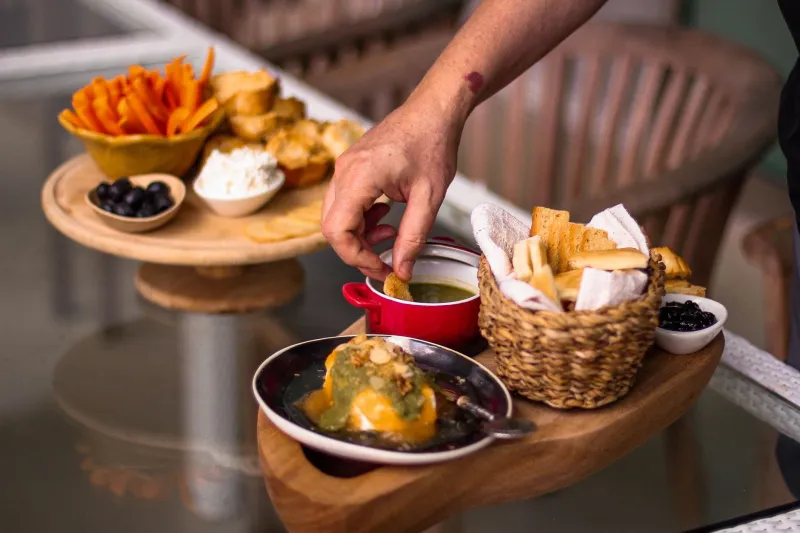
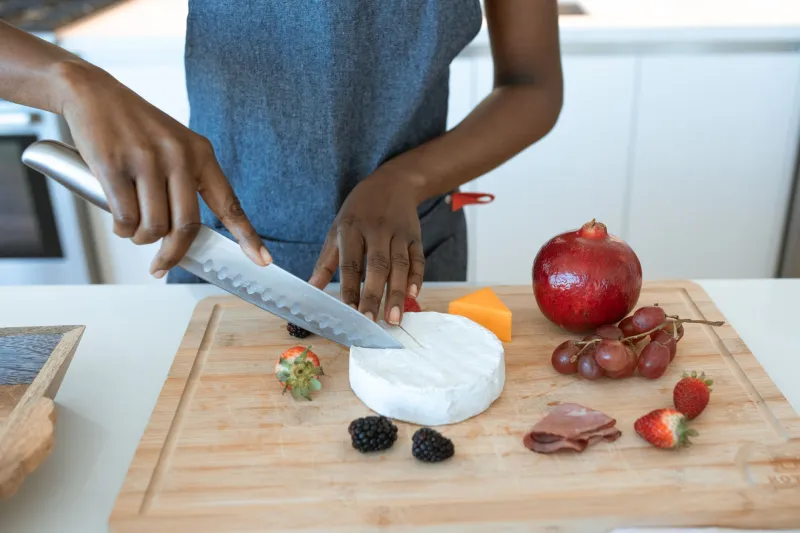
What works instead? Soft cheeses, pre-sliced and easy to lift. Folded charcuterie rather than stiff slices that fight back. Oatcakes and gentle seed crackers, decanted into a bowl so the packet does not crinkle every time someone reaches over. Pitted olives. Small squares of dark chocolate. Dried figs and apricots. Pre-cut sourdough, lightly toasted if you like, but not so crisp that it shatters. A small dish of honey or chutney with a spoon already in it. Everything one-handed, everything quiet, everything that can be eaten while looking at another person rather than down at your own lap.
This is not the place for a towering centrepiece either. The board should sit low and to one side, leaving clear space for books, glasses, phones face-down and the odd elbow. A book club table needs breathing room. The spread should look considered, not crowded.
What six people actually need
Book club is not dinner. It is a long snack with opinions. For six, aim for roughly 600 to 700g of cheese across three or four types, 250 to 300g of charcuterie, 200g of oatcakes or crackers, 150g of pitted olives, 200g of grapes, 150g of dried fruit and a small pot of chutney or honey. Add a sliced loaf of good bread and a little something sweet to finish. That is plenty. If people arrive hungry, they will fill up on bread and cheese; if they have already eaten, they will graze politely and still have room for wine.
Sourcing it in Bath is half the pleasure. Paxton & Whitfield on John Street is the obvious stop for cheese, and rightly so. The Fine Cheese Co. on Walcot Street is good for crackers, chutney and a well-chosen wedge or two. Bertinet Bakery or Landrace Bakery will sort the bread. The Saturday farmers' market at Green Park Station is ideal for fruit, olives and anything seasonal. Comins Tea is the answer for anyone not drinking wine, and an independent wine shop such as the Great Wine Co. will point you towards something interesting without the supermarket sameness.
You do not need to buy from every shop in one morning. Pick two or three, keep it simple and remember that the board is there to support the conversation, not to become a second job.
The layout: keep the pages turning
Use a low coffee table, a sideboard or even a sturdy kitchen island if the living room allows. Put the board at one end rather than dead centre. Set out small plates, side plates or napkins within easy reach. Provide small knives for the cheese and a couple of spoons for chutney. Keep the wine glasses stemless if you are worried about elbows, and put water on the table in a jug rather than making people get up.
The board itself can be divided into two loose zones: savoury on one side, sweet and fruity on the other. Keep the chutney and honey in small ramekins so they do not run into the cheese. Put the quiet crackers in a shallow bowl and the bread in a linen-lined basket. Leave a clear landing zone for books and glasses. If someone puts a paperback down next to the olives, it should not be a disaster.
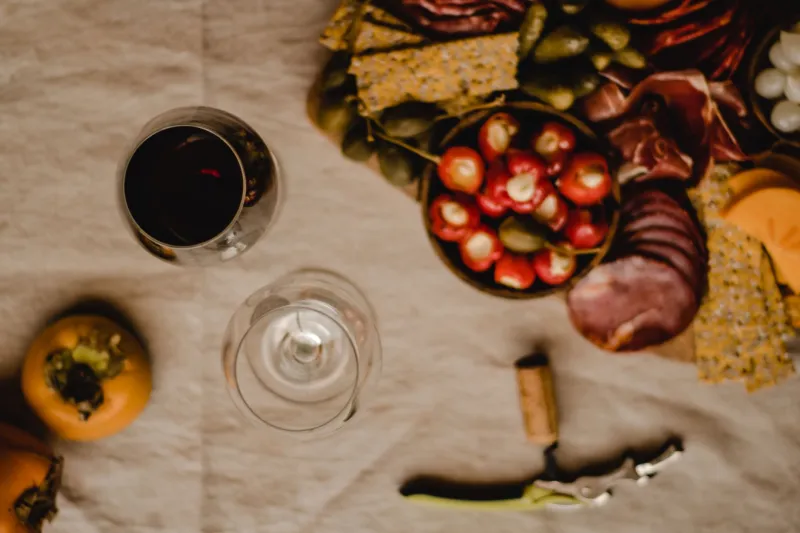
Styling should be low-fuss but deliberate. A dark green or oatmeal linen runner, neutral ceramics, a couple of low candles and a small vase of something seasonal will do more than a table full of props. Books can be part of the setting, but keep them away from the food. Nobody wants a first edition with a smear of camembert on the jacket.
Wine that lets the discussion lead
For six readers, three bottles is a sensible starting point, with a non-alcoholic option alongside. Something crisp and dry to begin with, such as a Picpoul de Pinet or a dry English white, works with soft cheese and smoked fish. A light red, maybe a Pinot Noir or a Beaujolais, will handle charcuterie and harder cheeses without overwhelming the room. If you want a little theatre, an English sparkling wine is never a bad idea for the first chapter.
Keep the pairings simple: white with the soft and creamy things, light red with the savoury and salty things, and a bottle of something alcohol-free for anyone driving home. Tea from Comins is a lovely finish if the discussion runs long, which it usually does.
The ten-minute reset
Halfway through, top up the board rather than rebuilding it. Keep a spare wedge of cheese, a handful of crackers and a few grapes in the kitchen. Replace the empty olive bowl. Wipe the crumbs away from the book zone. Put used plates in a quiet stack at the end of the table. The aim is not a perfect table; it is a table that keeps going without anyone missing the best bit of the argument.
A good Bath book club board should feel generous, local and quietly useful. It should not rustle. It should not need a knife and fork. It should not make anyone choose between a good line in the novel and a good bite of cheese. Get that right, and the food will do exactly what it should: stay in the background while six readers get pleasantly carried away.